
Choosing an entrance door for an apartment is not simply a matter of taste — it is a decision that shapes your feeling of safety, comfort, and privacy every single day. The entrance door is the invisible guardian of your home: it stands quietly between you and the noise of the hallway, the cold drafts of winter, or the occasional chaos outside your apartment. Даже просто просматривая современные решения на https://indigodoors.com/, вы начинаете лучше понимать, насколько важна правильная конструкция и качество исполнения.
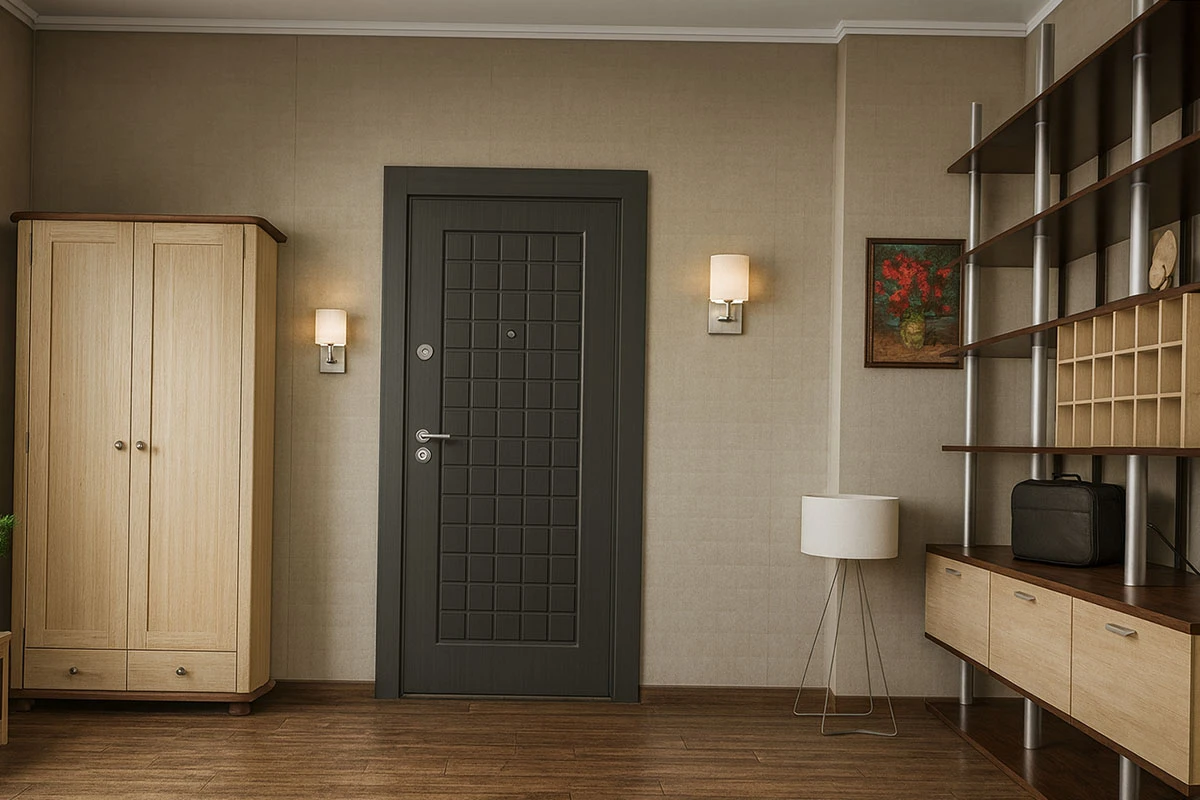
When chosen correctly, it becomes a reliable companion you never have to think about, because it always works flawlessly — opening softly, closing securely, and protecting your world with quiet confidence.
A good entrance door should balance several qualities: strength, insulation, sound protection, beautiful appearance, and professional installation. All these elements form a unified system that sets the tone of your home from the very first moment someone steps inside. Yet many people underestimate how complex choosing an entrance door really is.
What looks sturdy on the outside may have a poor lock. What looks elegant may lack real insulation. And what seems inexpensive may turn costly when repairs begin.
A truly good entrance door disappears into your daily life — because it protects you so effortlessly that you forget it’s even there.
To choose the best entrance door for an apartment, you need to understand materials, security systems, insulation, design, and technical details that influence comfort and safety.
Key Criteria for Choosing an Apartment Entrance Door
Before deciding on materials or design, it’s important to look at the broader picture. An entrance door is a complex product, and its quality consists of many layers — just like the comfort of your apartment consists of many small details working together.
A door may look strong yet be easy to pry open. It may look elegant but let in every sound from the stairwell. It may have thick steel but weak locks. Good buying decisions require understanding these nuances.
The most important criteria
- security and burglary resistance
- fire resistance and structural strength
- sound insulation from hallway noise
- thermal insulation (heat stays inside in winter)
- high-quality locks with anti-burglary protection
- reliable hinges and anti-removal pins
- tight sealing and multi-layer gaskets
- compatibility with hallway space and interior design
- professional installation that prevents misalignment
Each point plays a role in your overall comfort. The door must not rattle, whistle, or shift. It must not lose its seal. It should close softly but firmly, and feel solid under your hand. Every detail should build confidence, not doubts.
Which Material Is Best for an Apartment Entrance Door?
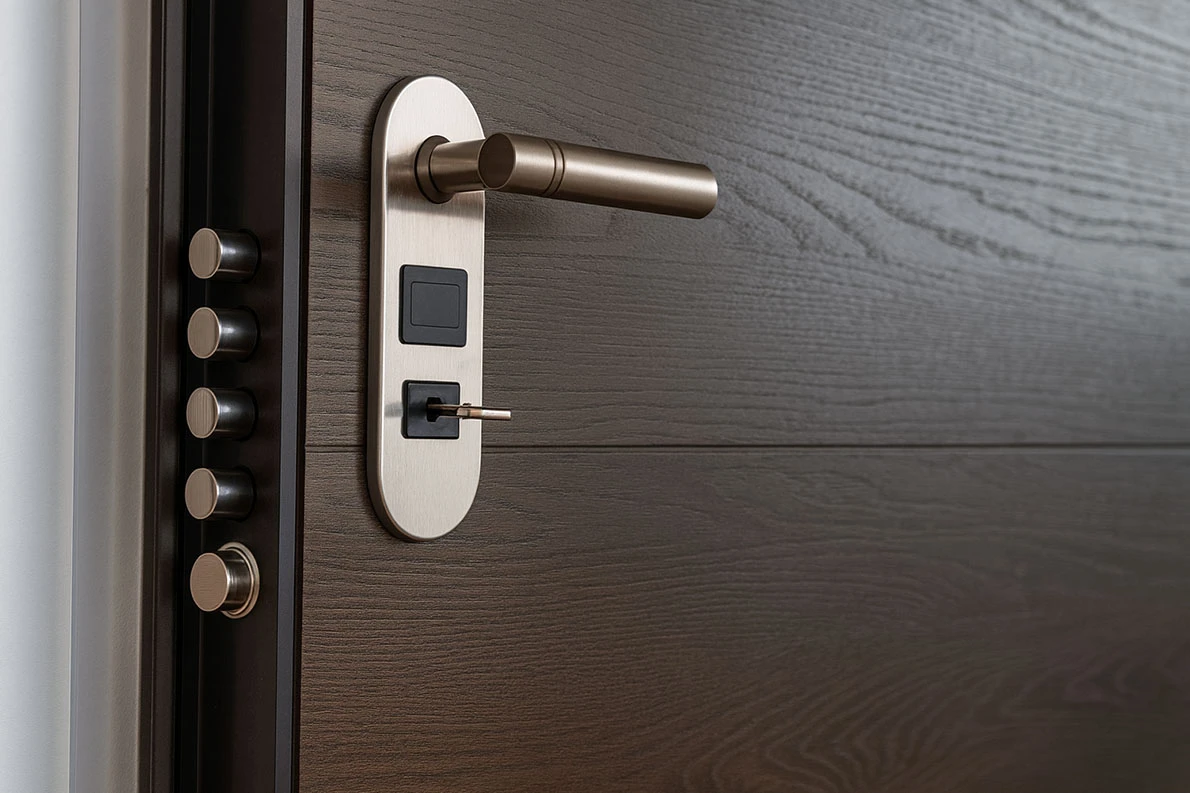
The material defines the physical strength of the door, how well it withstands impact, and how long it will stay stable without bending or deforming. For apartments, the most practical and safe choices are steel doors or combined (steel decorative panels) doors. They provide the best balance of protection and aesthetics.
Steel (Metal) Entrance Doors
Steel doors are the backbone of apartment security. Their internal structure — stiffeners, welded seams, reinforced corners — makes them extremely resistant to force. They do not swell like wood, do not warp with temperature changes, and can support multiple locks.
Advantages of steel doors
- excellent resistance to burglary attempts
- durable frame with welded reinforcements
- ability to integrate two or more premium locks
- long service life with minimal maintenance
- countless design options for any hallway
- high fire resistance
- strong hinges able to hold heavy construction
A high-quality steel door is solid yet elegant, with a smooth closing motion that gives a sense of stability every time you enter your home.
Combined Doors (Steel Frame Decorative Panels)
Combined doors have become extremely popular in modern apartment buildings. They include a strong steel base for security, combined with beautiful interior and exterior MDF panels or veneer for design.
Why combined doors are popular
- secure steel core
- customizable decorative panels
- excellent sound and thermal insulation
- possibility to replace panels later without changing the door
- wide range of colors, textures, and styles
- better harmony with interior design
This option is ideal when you need both safety and a pleasant aesthetic inside your apartment.
Solid Wood Doors (Less Common in Apartments)
Solid wood entrance doors are beautiful but not practical for most apartment buildings, especially older ones with temperature fluctuations and humidity.
Pros of solid wood
• luxurious, natural appearance
• excellent noise absorption
• heavy and satisfying structure
Cons
• lower burglary resistance compared to steel
• sensitive to humidity and temperature
• requires constant maintenance
Most homeowners choose steel or combined doors for apartments for their superior reliability.
“For apartment living, steel is not just a material — it is peace of mind.”
What Makes a Door Truly Safe?
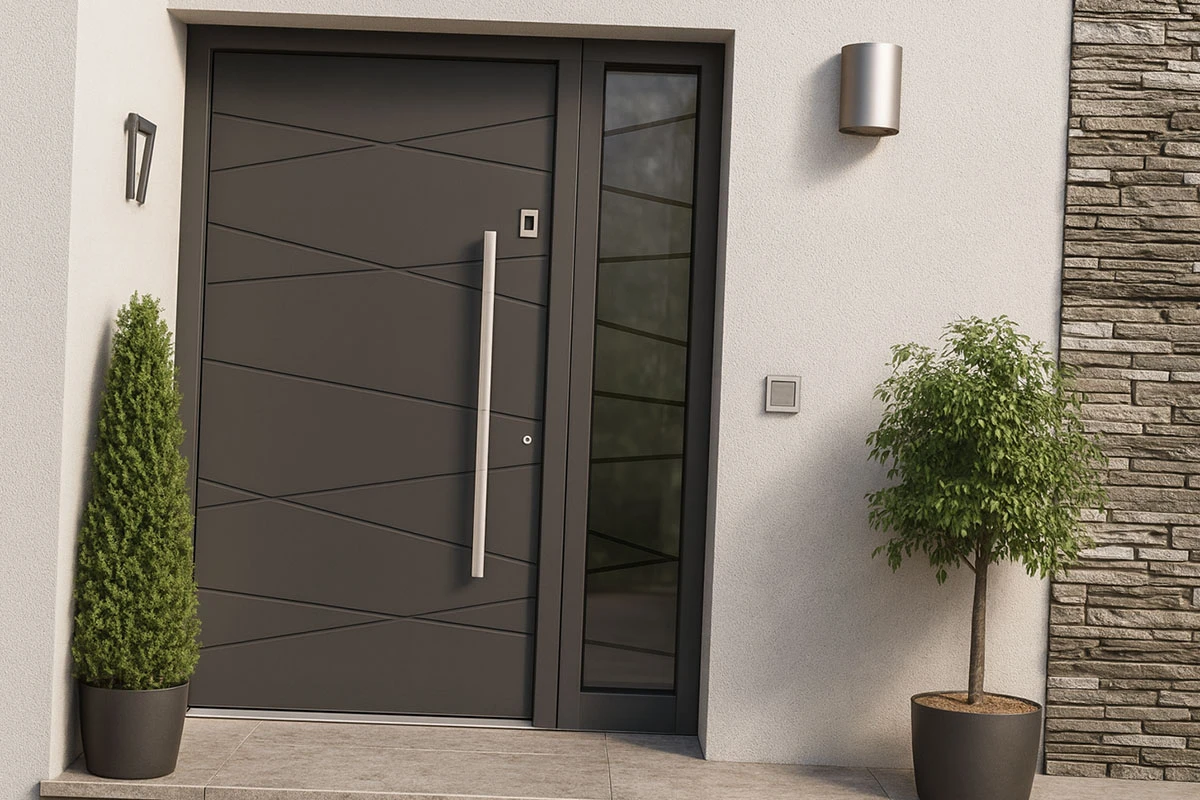
Security is the heart of an entrance door. A stylish finish will not matter if the lock is weak or the frame bends under pressure. It’s important to evaluate the entire construction, not just the surface.
Main security elements
- solid steel leaf with internal stiffeners
- reinforced frame fixed into the wall
- strong anti-removal pins
- heavy-duty hinges
- certified cylinder and mortise locks
- armored plates protecting the cylinder
- multipoint locking system
- peephole or panoramic viewer
Professional burglars look for weak points — and cheap doors often have plenty. Thin metal, cheap locks, hollow frames, poorly installed hinges — all these make the door vulnerable.
Lock Quality Matters
An apartment entrance door should have at least two different locks to complicate break-ins.
Why two locks are better
• different mechanisms prevent quick forced entry
• increased resistance to drilling and picking
• better distribution of force along the door leaf
• added psychological comfort
The lock types should complement each other: one cylinder lock and one lever lock create a dual barrier that significantly increases safety.
Sound and Thermal Insulation
One of the most underestimated qualities of an entrance door is sound insulation. Apartment hallways can be surprisingly noisy: footsteps, conversations, children, pets, elevator sounds, even smells. A well-insulated door creates a quiet, peaceful internal world.
What affects insulation
- internal filling (mineral wool, foam board, insulation layers)
- multiple seals around the perimeter
- tight closure without gaps
- thickness of decorative panels
- drop-down threshold or sealing threshold
- correct installation without voids
A good entrance door should turn your apartment into a private sanctuary where hallway noise simply melts away.
“A well-insulated door doesn’t just block noise — it creates calm.”
Thermal insulation is equally important: it helps maintain a stable temperature, reducing heating costs and eliminating drafts.
Fire Resistance and Building Requirements
Many modern apartment buildings require entrance doors to meet fire resistance standards or recommend specific types of doors for corridor safety.
Fire-resistant doors offer
• resistance to flames for a certain period
• delayed smoke penetration
• additional protection during emergencies
• compliance with building safety rules
Even if your building doesn’t require it, choosing a fire-resistant model is a wise investment in long-term safety.
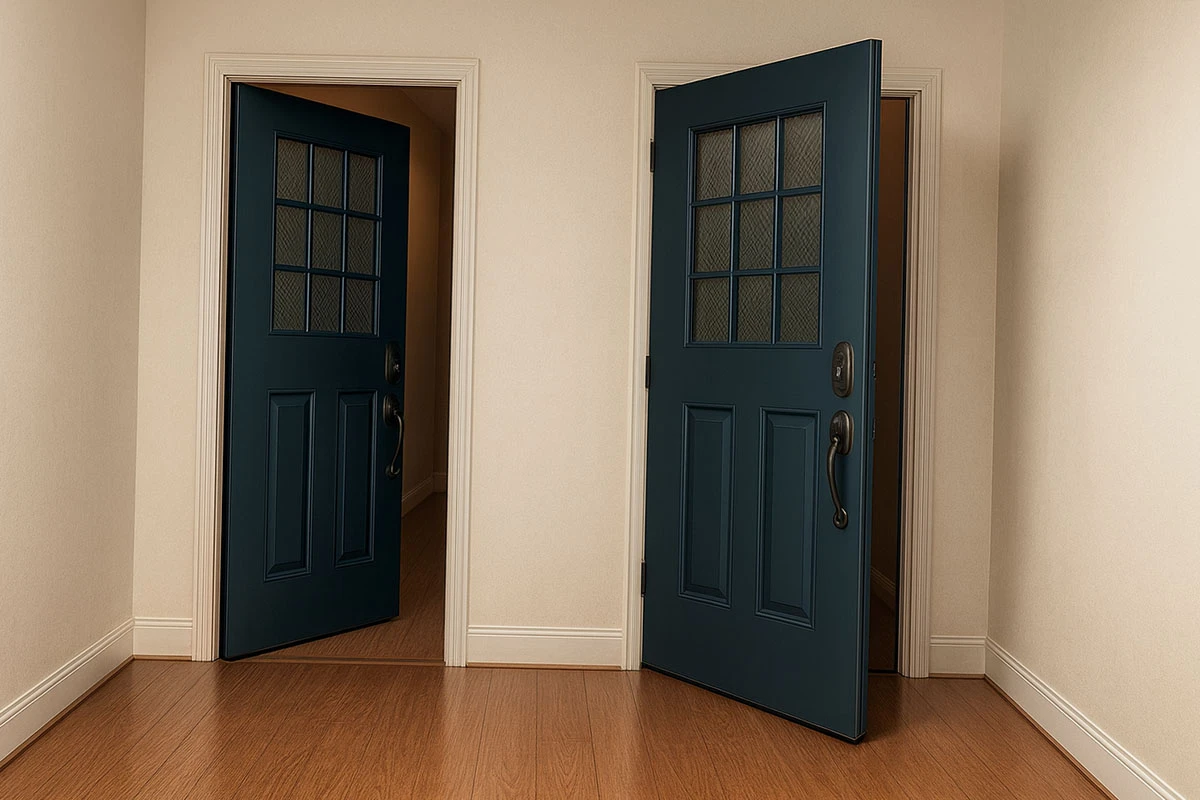
Opening Direction and Installation Details
Installation is where many homeowners make costly mistakes. The best door can become useless if installed poorly, at the wrong angle, or in a way that interferes with your hallway.
Key factors to consider
- inward or outward opening
- available space in hallway
- avoiding obstruction of neighbor’s doors
- hinge side depending on wall layout
- correct frame anchoring to prevent shifting
- alignment for silent and smooth closing
“A door’s performance is only as good as its installation.”
Always rely on professional installers — improper installation can ruin even the strongest door.
Design and Aesthetics: The Door as Part of Your Home
While security is crucial, the entrance door is also a decorative element. It’s the first impression guests receive and the last image you see as you leave home. For apartments, the interior panel of the door should harmonize with your floors, furniture, and interior doors.
Design aspects to consider
- interior panel color matching your décor
- minimalistic or classic detailing
- handle and hardware color (black, gold, nickel, chrome)
- patterns or milling that complement your style
- surface gloss or matte texture
- ability to combine with lamps, mirrors, and hallway furniture
The hallway side of the door often follows building rules, while the interior side can be fully customized to match your personal taste.